Bitcoin vs NetSuite: Quick Comparison
Feature Bitcoin NetSuite
Primary Role | Store of Value, Medium of Exchange | Unified Business Management Suite |
Supply Mechanism | Fixed max supply of 21 million | N/A (Software Platform) |
Operational Model | Decentralized Peer-to-Peer Network | Cloud ERP (Oracle) |
Key Benefit | Inflation Hedge, Economic Energy Storage | Data Unification, Operational Efficiency |
Target User | Individuals, Institutions | Businesses (over 40,000 users) |
Disclaimer: This article is for informational purposes only and does not constitute financial advice. Always conduct your own research before making any financial decision.
What Is Bitcoin?
Bitcoin is the initial and largest cryptocurrency by market capitalization, established in 2009 by the pseudonymous Satoshi Nakamoto. It operates on a decentralized peer-to-peer network, securing transactions and maintaining its ledger through Proof of Work consensus. This architecture ensures that no single entity controls the network, maintaining its operational autonomy.
decentralized: A system where control and decision-making are distributed across a network rather than centralized in a single entity. Proof of Work (PoW): A consensus mechanism requiring participants to expend computational effort to validate transactions and create new blocks, securing the network.
Bitcoin possesses a fixed maximum supply of 21 million coins, a design mechanism that prevents debasement by governments or financial institutions. This characteristic positions Bitcoin as an effective long-term hedge against inflation and a means to store economic energy across extended periods. Its function extends to a medium of exchange and a global store of value. 
What Is NetSuite?
NetSuite by Oracle offers a unified Cloud ERP (Enterprise Resource Planning) suite designed for comprehensive business management. This platform integrates accounting, financial management, inventory, and human resources into a single system, providing a singular source of truth for organizational data. Over 40,000 businesses currently utilize NetSuite for their enterprise management requirements.
Cloud ERP: A type of Enterprise Resource Planning software delivered and managed over the internet, accessible via a web browser.
The system is engineered to enhance business efficiency, enabling organizations to close their financial books in days rather than weeks. It provides real-time insights and forecasting capabilities, supporting quick decision-making. NetSuite consolidates diverse business functions, aiming to streamline operations and provide comprehensive data visibility and control. 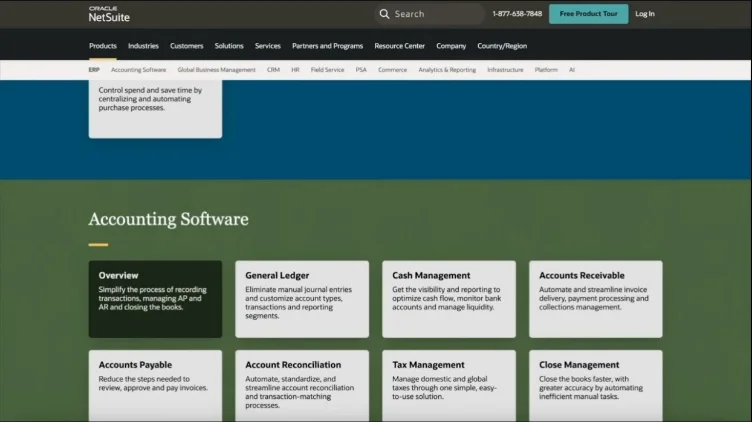
Core Functionality Compared
Feature Bitcoin NetSuite
Primary Function | Economic Energy Storage, Medium of Exchange | Integrated Business Management |
Core Value | Protection against currency debasement | Operational efficiency and data unification |
Bitcoin functions primarily as a digital store of value and a medium of exchange, designed to preserve economic energy over time by resisting monetary debasement. NetSuite, in contrast, serves as a comprehensive software platform that unifies various business management processes for operational efficiency.
Economic Stability Compared
Feature Bitcoin Fiat Currency
Supply Mechanism | Fixed maximum supply of 21 million coins | Governed by central authorities |
Debasement Risk | None, due to fixed supply | Prone to debasement through inflation |
Bitcoin's fixed supply mechanism provides a structural defense against inflation, acting as an effective hedge over the long term. This contrasts with fiat currencies, which can be debased by governments, leading to a loss of purchasing power through inflation.
Operational Structure Compared
Feature Bitcoin NetSuite
Architecture | Decentralized Peer-to-Peer Network | Centralized Cloud-Based Platform |
Consensus/Platform | Proof of Work (PoW) | Proprietary Software, Cloud ERP |
Bitcoin operates on a decentralized peer-to-peer network secured by Proof of Work, ensuring distributed control and verification. NetSuite, as a cloud ERP, functions on a centralized, proprietary platform maintained by Oracle, providing integrated software services.
Business Application Compared
Feature Bitcoin NetSuite
Target User | Individuals, Institutions | Businesses (e.g., small, medium, enterprise) |
Key Benefit | Long-term value preservation, transaction settlement | Streamlined operations, unified data, financial closing |
Bitcoin is utilized by individuals and institutions for capital preservation and as a medium for transactions within a decentralized framework. NetSuite is employed by over 40,000 businesses seeking to unify their accounting, financial management, inventory, and HR functions into a single efficient system.
Who Should Use Bitcoin?
- Individuals and institutions prioritizing a long-term store of value.
- Entities seeking a hedge against inflation and currency debasement.
- Users requiring a decentralized medium of exchange.
Who Should Use NetSuite?
- Businesses requiring a unified platform for accounting, financial management, inventory, and HR.
- Organizations aiming to reduce financial closing times from weeks to days.
- Companies that require a single source of truth for all organizational data.
- Enterprises seeking real-time insights and forecasting capabilities for operational decisions.
Side-by-Side Summary
Dimension Bitcoin NetSuite
Primary Role | Store of Value, Medium of Exchange | Unified Business Management Suite |
Supply | Fixed at 21 million | N/A (Software as a Service) |
Architecture | Decentralized Peer-to-Peer | Centralized Cloud ERP |
Consensus/Platform | Proof of Work | Proprietary Software |
Inflation Hedge | Effective due to fixed supply | Not applicable |
Business Efficiency | N/A (non-business management tool) | High (fast financial closing, unified data) |
User Base | Global individuals and institutions | Over 40,000 businesses |
Frequently Asked Questions
Is Bitcoin better than NetSuite?
Bitcoin and NetSuite serve fundamentally distinct purposes. Bitcoin is designed as a decentralized store of value and medium of exchange, while NetSuite is a comprehensive cloud ERP platform for business management. The determination of "better" depends entirely on the specific functional requirement.
Which is safer — Bitcoin or NetSuite?
Bitcoin's security is derived from its decentralized Proof of Work consensus mechanism, which protects against manipulation and unauthorized issuance. NetSuite's security pertains to its robust enterprise-grade cloud infrastructure and data management protocols. These are different forms of security, each relevant to their respective operational domains.
Can I use both Bitcoin and NetSuite?
Yes, it is possible to use both Bitcoin and NetSuite. They address different needs: Bitcoin for digital value storage and transfer, and NetSuite for comprehensive business operations. Their functionalities are not mutually exclusive.
Which is better for hedging against inflation?
Bitcoin, with its fixed maximum supply of 21 million coins, is designed to be an effective hedge against inflation over the long term. Fiat currencies, which can be debased by governments, are prone to inflation and a loss of purchasing power.
Which offers unified business management?
NetSuite provides a unified business management suite, integrating accounting, financial management, inventory, and HR into a single platform. It acts as a single source of truth for organizational data, streamlining business operations.