If you've ever wondered how Bitcoin actually moves from one wallet to another: imagine a public, shared digital record book that everyone can see but no single person owns. When you send Bitcoin, it's like writing an entry into this book. A "confirmation" means that your entry has been formally added and sealed onto a page of this permanent record. This process ensures the transaction is legitimate and makes it incredibly difficult to change or remove later. The more confirmations a transaction has, the more securely it is recorded.
Disclaimer: This article is for informational purposes only and does not constitute financial advice. Always conduct your own research before making any financial decision.
What Is a Bitcoin Transaction Confirmation?
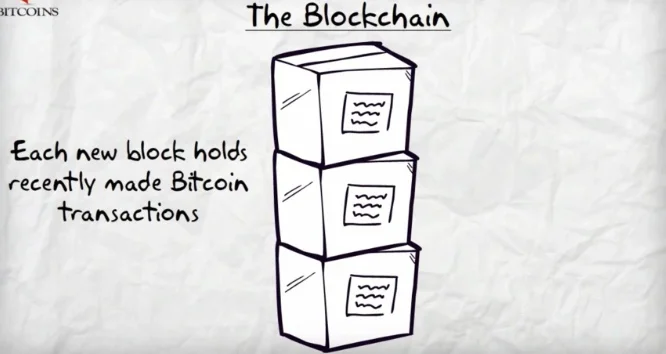
When a Bitcoin transaction occurs, a confirmation signifies that this transaction has been verified and added to the permanent record of the blockchain. Think of the blockchain as a never-ending digital ledger that records every single Bitcoin movement. Each new block added to this ledger contains a group of recently verified transactions. 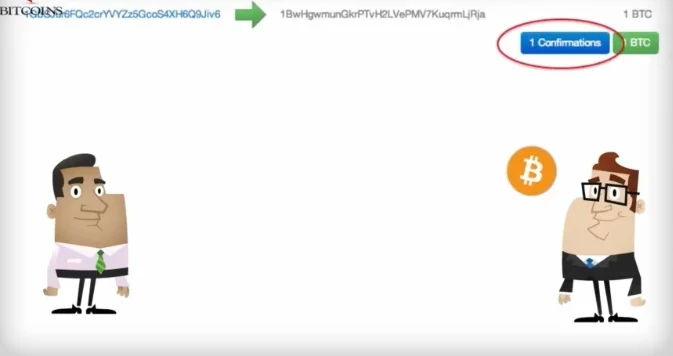 When your transaction is included in one of these blocks, it receives its first confirmation. Subsequent blocks built on top of that one provide additional confirmations, strengthening the transaction's security.
How Does a Bitcoin Transaction Confirmation Work?
Understanding how a Bitcoin transaction gains confirmations helps illustrate its security. Here is a step-by-step breakdown of the process:
- Initiating a Transaction: When you decide to send Bitcoin to someone, your request is broadcast across the network of computers that supports Bitcoin.
Entering the Unconfirmed Transactions Pool: This broadcasted Bitcoin transaction does not immediately go onto the blockchain. Instead, it first enters an unconfirmed transactions pool. This pool is like a waiting area for all pending transactions.Bitcoin transaction: An instruction to move Bitcoin from one digital address to another. Network: The global system of computers running the Bitcoin software that communicates and processes transactions. Unconfirmed transactions pool: A temporary holding area for Bitcoin transactions that have been broadcast but not yet added to a blockchain block.
- Verification by Miners: Specialized computers, known as miners, actively monitor the unconfirmed transactions pool. These miners select transactions from the pool and work to verify their validity, ensuring that the sender genuinely owns the Bitcoin they are attempting to send.
Miners: Specialized computers or groups of computers that verify Bitcoin transactions and add them to new blocks on the blockchain. Valid: In the context of a Bitcoin transaction, this means the sender genuinely owns the Bitcoin they are trying to send and has the right to spend it.
- Grouping into a Block: Once miners have verified a group of transactions, they bundle them together into a block.
Block: A collection of verified Bitcoin transactions bundled together and added to the blockchain.
- Adding to the Blockchain: This new block is then added to the end of the existing blockchain. When your transaction is included in this newly added block, it receives its first confirmation.
Blockchain: A public, unchangeable digital ledger made up of a chain of blocks that records all Bitcoin transactions. Confirmation: The act of a Bitcoin transaction being included in a block on the blockchain, making it more permanent and difficult to alter. Each new block added on top provides an additional confirmation.
- Gaining Further Confirmations: After a block is added, miners begin working on the next block to be built on top of it. Each new block that gets added on top of the one containing your transaction counts as an additional confirmation. The more blocks stacked on top, the more secure your transaction becomes.
Why Do Bitcoin Transaction Confirmations Matter?
Bitcoin transaction confirmations are crucial for the security and finality of your transactions. They make it exceptionally difficult for anyone to reverse or alter a transaction after it has been broadcast. Each additional confirmation further "buries" your transaction under new blocks, strengthening its immutability.
For significant transactions, waiting for multiple confirmations is a common practice to achieve a high degree of certainty. It is widely recommended to wait for at least six confirmations to be 99.9% sure a transaction will not be canceled. This process typically takes around one hour to complete. 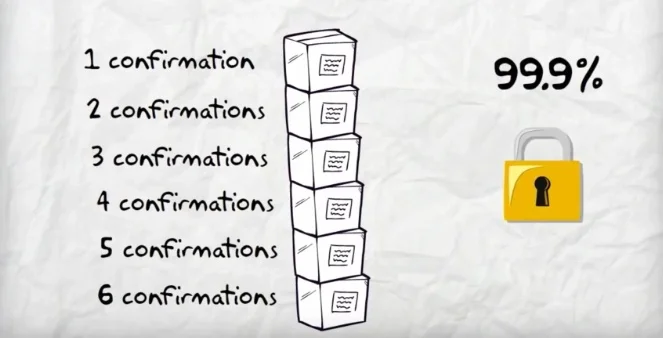 Without confirmations, the integrity of the Bitcoin system would be compromised, making it susceptible to manipulation.
Key Terms You Should Know
Term | Plain-English Meaning |
|---|---|
Bitcoin transaction | An instruction to move Bitcoin from one digital address to another. |
Network | The global system of computers running the Bitcoin software that communicates and processes transactions. |
Unconfirmed transactions pool | A temporary holding area for Bitcoin transactions that have been broadcast but not yet added to a blockchain block. |
Miners | Specialized computers or groups of computers that verify Bitcoin transactions and add them to new blocks on the blockchain. |
Valid | In the context of a Bitcoin transaction, this means the sender genuinely owns the Bitcoin they are trying to send and has the right to spend it. |
Block | A collection of verified Bitcoin transactions bundled together and added to the blockchain. |
Blockchain | A public, unchangeable digital ledger made up of a chain of blocks that records all Bitcoin transactions. |
Confirmation | The act of a Bitcoin transaction being included in a block on the blockchain, making it more permanent and difficult to alter. Each new block added on top provides an additional confirmation. |
Common Misconceptions
- Misconception: All Bitcoin transactions require six confirmations.Correction: While six confirmations are recommended for a very high level of certainty (99.9%), for smaller amounts, many people and services consider one confirmation sufficient. The necessary number of confirmations often depends on the value of the transaction and your personal comfort level with risk.
- Misconception: Bitcoin transactions can be easily reversed.Correction: Reversing a confirmed Bitcoin transaction is extremely difficult and requires substantial time, effort, and computing power. Once a transaction has several confirmations, it is considered final due to the way the blockchain is structured.
Frequently Asked Questions
Is a Bitcoin transaction confirmation safe?
Yes, a Bitcoin transaction confirmation makes the transaction increasingly safe. Each confirmation means the transaction is more deeply embedded in the blockchain, making it exponentially harder to alter or reverse. For example, six confirmations provide a 99.9% certainty against reversal.
Do I need to wait for confirmations?
Waiting for confirmations is generally recommended, especially for larger amounts, to ensure the security and finality of your transaction. The more confirmations a transaction has, the more permanent it becomes.
How long do Bitcoin transaction confirmations take?
The time it takes to receive confirmations can vary, but generally, each new block is added to the blockchain approximately every 10 minutes. Therefore, achieving six confirmations typically takes about one hour.
Can Bitcoin transactions be reversed?
Reversing a confirmed Bitcoin transaction is extremely difficult and impractical. It would require an immense amount of computing power to rewrite the blockchain history, especially after multiple blocks have been added on top of your transaction.