What Is Solana Staking?
Solana staking involves delegating SOL tokens to a validator on the Solana network. This process helps to secure the blockchain and, in return, stakers can earn rewards. Unlike some other networks, Solana staking does not require a minimum stake amount, making it accessible to various holders.
Disclaimer: Staking rewards are not guaranteed and may vary. This article is for informational purposes only and does not constitute financial advice. Always conduct your own research before making any financial decision.
How Solana Staking Works
Certain blockchain networks, including Solana, operate using a Proof of Stake (PoS) system. This system is fundamental for checking and verifying transactions on the network.
In a PoS system, individuals or entities called validators lock up their crypto, known as staking, as a form of collateral. This "promise" ensures they will accurately record transactions in the blockchain's "notebook." The network randomly selects a validator to verify a transaction. The more coins a validator (or those who delegate to them) has staked, the higher their chance of being chosen.
By staking, you are contributing to the security and smooth operation of the Solana blockchain. If a chosen validator performs their duties effectively, they earn crypto as a reward. Conversely, if a validator attempts to cheat or makes a significant error, they can be slashed, meaning a portion or all of their staked crypto may be destroyed.
Proof of Stake: A blockchain consensus mechanism where validators lock up cryptocurrency as collateral to verify transactions and maintain network security.
Validator: An entity or specialized computer responsible for verifying transactions and adding new blocks to a Proof of Stake blockchain.
Slashing: A penalty imposed on validators for misbehavior or failing to perform their duties, resulting in the loss of some or all of their staked cryptocurrency.
Liquid Staking: This is an alternative method where you still help secure the network, but you receive a special derivative token in exchange for your locked-up crypto. This derivative token can then be used in other DeFi applications or traded, providing liquidity while your original crypto earns rewards. However, the service providing the derivative token typically takes a fee from your rewards, and this method introduces counterparty risk – the risk that the protocol providing the derivative token could fail, potentially leading to a loss of funds. For this guide, we will focus on traditional Proof of Stake.
Liquid Staking: A staking method where users receive a tradable derivative token representing their staked cryptocurrency, allowing them to use the staked asset across the DeFi ecosystem while it is locked.
Derivative Token: A special token received in liquid staking that acts as a placeholder for the user's staked cryptocurrency, allowing for liquidity and use in other applications.
Counterparty Risk: The risk that one of the parties in a financial contract or transaction will not fulfill their obligations, particularly relevant in liquid staking if the protocol fails.
Staking Requirements
Requirement
Details
Minimum Stake Amount
None
Supported Wallets (Native Staking)
Phantom, Solflare
Supported Wallets (Cold Wallet Staking)
Tangem (supports SOL, TRX, ATOM, BNB, ETH-PoL. Plans for DOT, ADA, TON)
Technical Prerequisites
Not required for delegators (most users), only for running a validator.
Current Staking Rewards
Staking rewards are estimates and can fluctuate based on several factors, including the number of participants, network activity, and inflation schedules.
Cryptocurrency
Estimated Annual Percentage Rate (APR)
Solana (SOL)
5-8%
Cardano (ADA)
3-6%
Ethereum (ETH)
3-7%
Note: The APR represents an estimated annual return on your staked assets. Annual Percentage Yield (APY) may be higher if rewards are automatically re-staked, as APY accounts for compounding.
Lock-Up Period and Unstaking
When staking Solana, your funds undergo a specific lock-up process involving a warm-up period and an unbonding period.
- Warm-up Period: 3 days. This is the duration before your SOL tokens begin actively staking and earning rewards.
- Unbonding Period: 3 days. This is the time it takes for your SOL to become available in your wallet after you initiate an unstake request.
- The combined lock-up period for Solana staking is approximately 6 days. During this time, your SOL tokens are not immediately transferable or tradable.
To unstake your Solana:
- After the warm-up period, navigate to your staked Solana in your wallet.
- Select the "Unstake" option.
- Wait for the 3-day unbonding period to complete.
- Once the unbonding period is finished, your Solana will be unlocked and available in your wallet.
- Important: It is advisable to keep approximately $10 worth of SOL in your wallet to cover network fees when you eventually unstake your crypto. Solana network fees are typically very low, often around 1 cent for staking transactions.
Warm-up Period: The initial duration after staking where your assets are locked but not yet actively earning rewards.
Unbonding Period: The time required for staked assets to become liquid and accessible in your wallet after an unstake request.
Step-by-Step: How to Stake Solana (SOL) with a Cold Wallet
This guide focuses on staking with a cold wallet, which offers enhanced security benefits. The process for staking with centralized exchanges or decentralized platforms may vary in interface but often follows similar core steps.
Staking Solana using the Tangem Cold Wallet
- Select Solana (SOL) in your Tangem Wallet App: Open your Tangem app and choose Solana from your list of cryptocurrencies.
- Add SOL to Your Wallet: Ensure you have SOL tokens in your Tangem cold wallet. You can either send them from a crypto exchange or purchase them directly within the wallet app.
- Initiate Staking: With SOL selected, tap the "Stake" button.
- Review Staking Details: Your wallet will display important information specific to Solana staking:
- APR: The estimated annual percentage rate you can expect to earn.
- Unbonding Period: The 3-day period required to unstake.
- Reward Claiming: Solana rewards are typically collected automatically.
- Warm-up Period: The 3-day period before your staking begins.
- Reward Schedule: How often rewards are distributed (e.g., every 2-3 days).
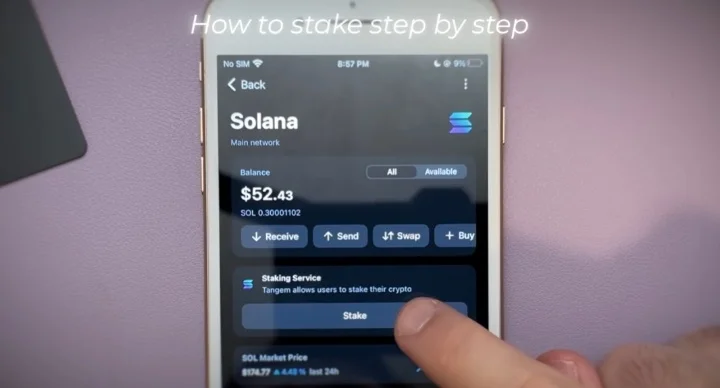
- Proceed to Stake: After reviewing the details, tap the "Stake" button to continue.
- Enter Amount to Stake: Input the amount of SOL you wish to stake.
- Caution: Do not stake all your SOL. It is recommended to leave approximately $10 worth of SOL in your wallet to cover future network fees, such as when you decide to unstake.
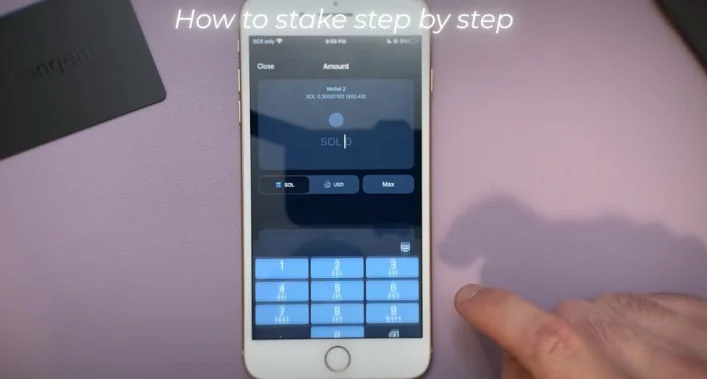
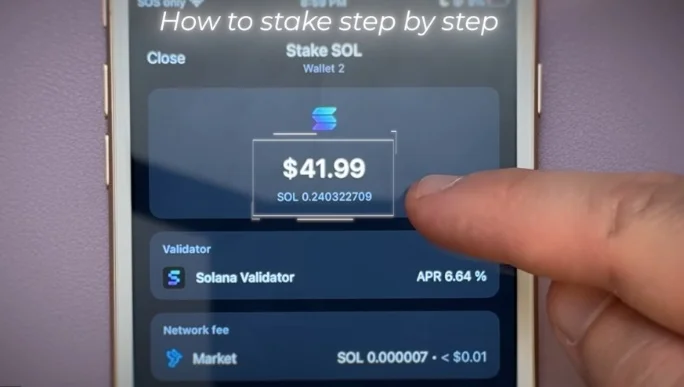
- Review Final Details: A summary screen will appear, showing the amount you are staking, the selected validator (in some cases, you might have multiple choices, but for Solana on Tangem, it might be a single vetted option), and the network fee (e.g., 1 cent for Solana).
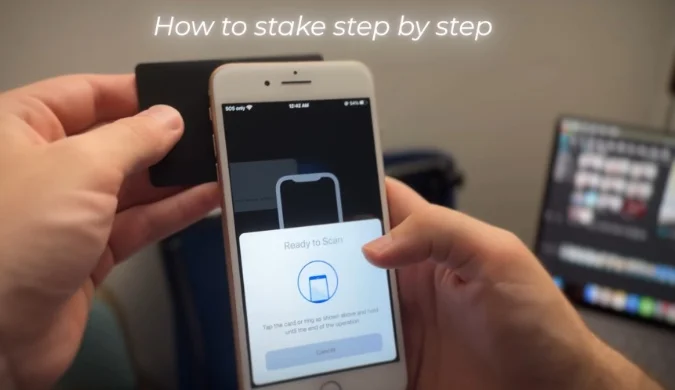
- Confirm Transaction: If all details are correct, tap "Stake" and then confirm the transaction using your Tangem card by holding it to the back of your phone.
- Staking Confirmation: You will receive a confirmation that your Solana staking transaction was successful.
Staking Risks
Staking cryptocurrencies, including Solana, involves various risks that users should be aware of:
- Lock-Up Liquidity Risk: Your staked SOL tokens are locked for a combined warm-up and unbonding period of 6 days. During this time, you cannot move, sell, or access your crypto. If the market price of SOL drops significantly during this period, you will be unable to sell to mitigate losses. The value of your crypto can still decrease while it is staked.
- Validator Risk: When you delegate your SOL to a validator, you are entrusting them with a crucial role. While you maintain custody of your funds, the validator's performance affects your rewards and security. If you choose an untrustworthy or poorly performing validator, it could potentially impact your earned rewards or expose your stake to other issues. Choosing vetted or trusted validators is important.
- Slashing Risk: This risk occurs if a validator misbehaves, makes significant errors, or breaks network rules. Slashing is a penalty where a portion, or in rare extreme cases, all of the staked crypto (both the validator's and the delegators' funds) can be destroyed by the network. On major networks like Solana, slashing events are rare, occurring in less than 1% of cases annually.
- Smart Contract Risk: When staking through decentralized platforms or liquid staking protocols, you interact with smart contracts. If these contracts contain vulnerabilities, bugs, or are maliciously designed, they could potentially lead to the loss of your staked funds or even drain your wallet. Cold wallets help mitigate some risks but do not eliminate smart contract risk if interacting with sketchy websites.
- Counterparty Risk (Liquid Staking Specific): If you choose to use liquid staking, you rely on the protocol or company issuing the derivative token. Should that protocol fail or be exploited, you could lose access to your underlying staked assets, even with a derivative token in hand.
Staking vs Not Staking
Understanding the difference between staking your Solana and simply holding it is crucial for making informed decisions.
Feature
Staking Solana
Not Staking Solana
Network Contribution
Helps secure and operate the Solana blockchain by validating transactions.
Simply holding SOL does not directly contribute to network security or operation.
Potential Rewards
Opportunity to earn estimated rewards (e.g., 5-8% APR) in SOL tokens.
No direct earning of rewards from the network for holding.
Liquidity
Your SOL tokens are locked for a warm-up (3 days) and unbonding period (3 days), totaling 6 days, during which they cannot be moved or sold.
Your SOL tokens are fully liquid and can be moved, sold, or traded at any time.
Risks Involved
Exposure to lock-up liquidity risk, validator risk, slashing risk, and smart contract risk (depending on method).
Primary risk is price volatility of SOL; no additional staking-specific risks.
Requirements
Requires delegating to a validator (no minimum stake).
No specific requirements beyond holding SOL in a wallet.
Frequently Asked Questions
Is Solana staking safe?
Staking Solana involves various risks, including the lock-up of your funds, potential slashing penalties if a validator misbehaves, and smart contract vulnerabilities if using certain platforms. While major networks like Solana have robust systems, no form of crypto activity is entirely risk-free. It is important to understand these risks before staking.
How much can I earn staking Solana?
The amount you can earn from staking Solana is an estimate and not guaranteed. Currently, the estimated Annual Percentage Rate (APR) for Solana staking ranges from 5-8%. Your actual rewards can vary based on factors such as the total number of SOL being staked on the network, transaction fees, and any service fees charged by your chosen validator or platform.
Can I unstake at any time?
When you initiate an unstake request for Solana, your funds enter an unbonding period, which for Solana is 3 days. During this time, your SOL tokens are locked and cannot be moved or traded until the period is complete. Therefore, you cannot access your unstaked funds instantly.
What is the minimum amount to stake Solana?
There is no minimum stake amount required to delegate SOL tokens on the Solana network. This makes Solana staking accessible to holders of any size.
Where do Solana staking rewards come from?
Solana staking rewards primarily come from the minting of new SOL coins (inflationary rewards) and, to a lesser extent, from transaction fees collected on the network. Over time, the minting of new coins is planned to decrease, with transaction fees expected to become a more significant source of rewards for stakers.